
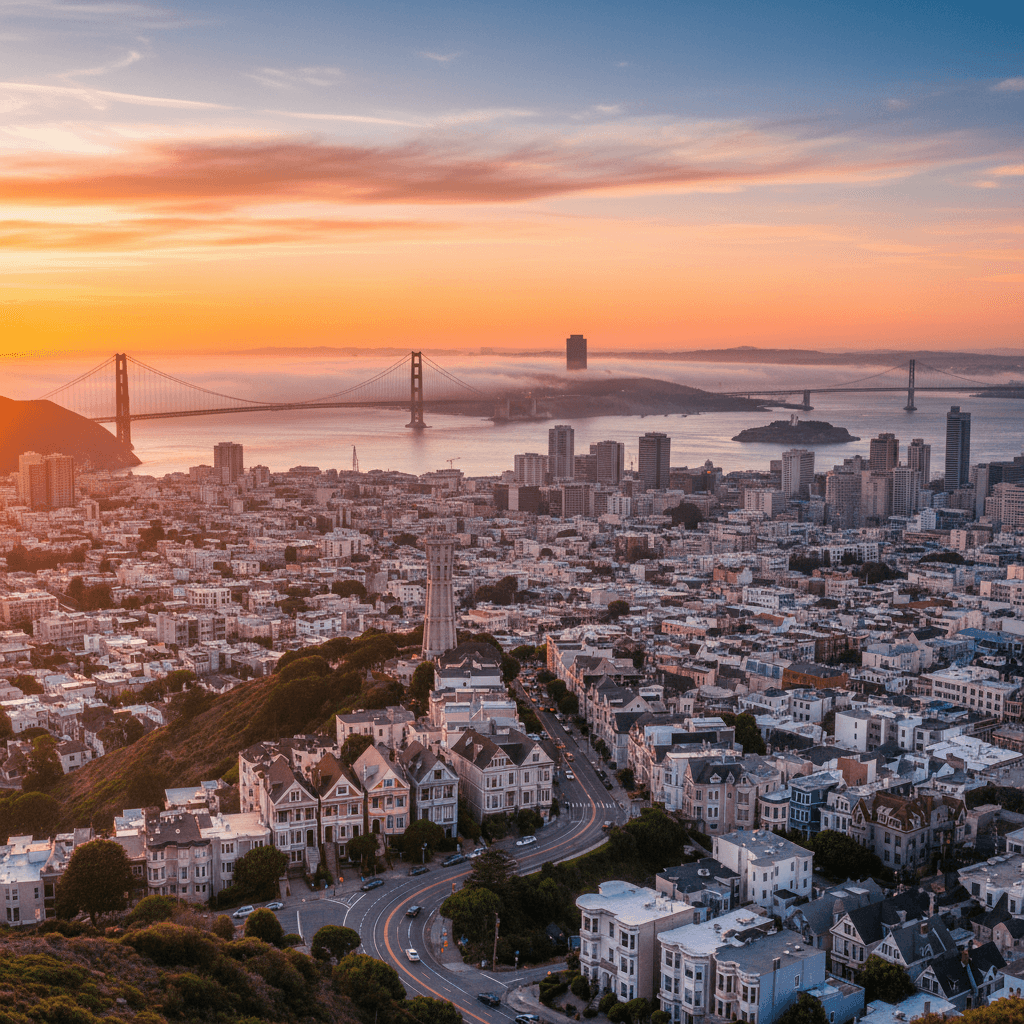
San Francisco
United States · West Coast
San Francisco is a compact, hilly coastal city in Northern California known for its iconic Golden Gate Bridge, historic cable cars, and diverse neighborhoods. It anchors the wider San Francisco Bay Area, a major global center for technology, culture, and innovation.
Best time to visit
September and October generally offer the clearest skies and mild temperatures, making them ideal for visiting. Late spring (May–June) can also be pleasant, though summer months often bring coastal fog and cooler conditions than many visitors expect.
Language
English
Currency
USD
Interesting facts
- San Francisco’s dramatic growth began with the California Gold Rush of 1849, when it rapidly transformed from a small settlement into the largest city on the U.S. West Coast at the time. That boom established its long-term role as a financial and commercial hub for the Pacific region.
- The city is officially a consolidated city-county—“the City and County of San Francisco”—making it both a municipality and a county with one unified government. Within its relatively small land area, the city includes stretches of Pacific Ocean coastline and parts of San Francisco Bay, plus islands such as Alcatraz and Treasure Island.
- The San Francisco Bay is one of the largest and most significant estuaries on the Pacific coast of the Americas, draining about 40% of California’s land area. It was designated a Ramsar Wetland of International Importance in 2013, highlighting its ecological value for migratory birds and marine life.
- Ocean Beach forms much of San Francisco’s western edge, running about 3.5 miles along the Pacific Ocean. It is known for strong currents, cold water, and frequent fog—conditions that make it scenic and popular with experienced surfers, but often risky for casual swimming.
- The broader Bay Area, commonly called “the Bay,” comprises nine core counties surrounding San Francisco Bay and is home to around 7.7 million people. It is renowned for its natural beauty, universities, wine regions, and Silicon Valley, one of the world’s most important technology and innovation clusters.
- San Francisco International Airport (SFO), located just south of the city in San Mateo County, is the primary international gateway for the Bay Area and one of the busiest airports in the United States. It serves as a major hub for United Airlines—particularly for transpacific flights—and for Alaska Airlines.
Local tips
- Pack layers, not just summer clothes: San Francisco’s climate is generally mild but often foggy and windy, especially near the ocean and in the evenings, so a light jacket is useful even in July and August.
- Use public transit and walking for central areas: Neighborhoods like downtown, Chinatown, North Beach, and the Embarcadero are relatively compact and well-served by buses, light rail, and historic streetcars; parking can be expensive and limited.
- Be cautious at Ocean Beach and coastal areas: Strong currents, rip tides, and cold water make swimming hazardous; follow posted warnings and stay close to shorelines or stick to walking, picnicking, and photography.
- Account for microclimates when planning your day: It can be sunny and warm in one neighborhood and foggy and cool a few miles away by the coast, so check conditions for specific areas like the Golden Gate, Ocean Beach, or the Mission District.
- When arriving via SFO, consider BART or other transit into the city: The regional rail link provides a straightforward, often faster alternative to driving during rush hours between the airport and central San Francisco.
- If driving the coast, State Route 1 offers scenic access: This highway runs along much of California’s Pacific coastline and passes through the Bay Area, including a segment that crosses the Golden Gate Bridge between San Francisco and Marin County.