
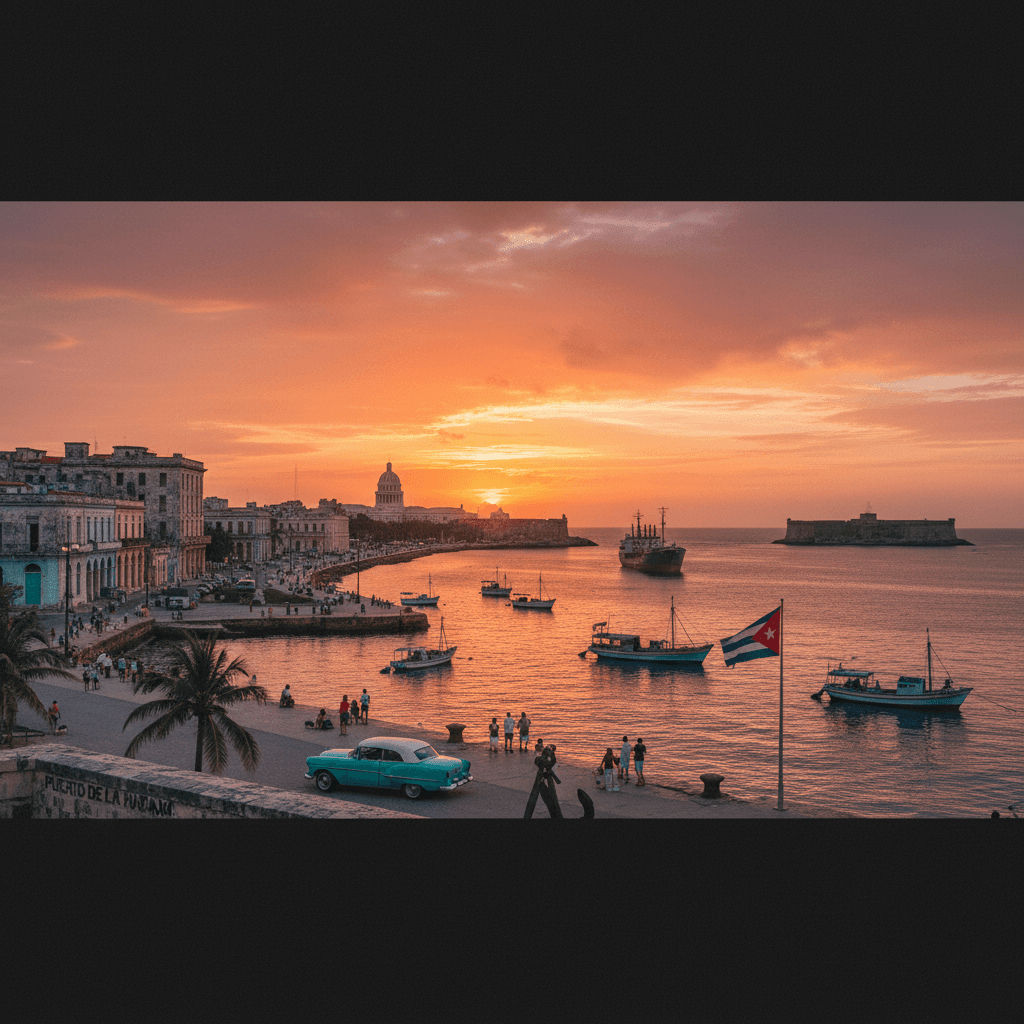
Havana Harbor (Puerto de La Habana)
Havana, Cuba
Your port day at a glance
- Walk to town?
- Ask us
- Distance to town
- The Sierra Maestra cruise terminal sits immediately adjacent to Old Havana, just off Plaza de San Francisco, making the historic center an easy, level walk within a few minutes of the gangway.
- Currency
- Cuban Peso / CUP
On this page
Getting to town
Distance to town: The Sierra Maestra cruise terminal sits immediately adjacent to Old Havana, just off Plaza de San Francisco, making the historic center an easy, level walk within a few minutes of the gangway..
Your day in port
For an 8–10 hour call, agents can suggest a morning guided walking tour of Old Havana, a midday break or lunch at a paladar, and an afternoon classic car tour including the Malecón and Revolution Square, leaving buffer time to shop or relax before reboarding. If the ship overnights, an evening music show or live-music bar visit adds a memorable cultural layer.
Best time to visit
Peak months for cruising into Havana are November through April, when humidity and rain are lower and the risk of tropical storms is minimal. May and early June can also be pleasant but are more humid and mark the beginning of hurricane season.
- Atlantic hurricane season runs June 1 to November 30, with the highest risk of storms typically August–October.
- Summer (June–September) is hot and humid, with highs often around 30°C/86°F and strong sun.
- Short, intense downpours are common in the rainy season, so pack a light rain layer.
- Sea breezes can make evenings along the Malecón feel cooler; a light layer is useful in winter months.
Shore experiences
- Easy walking tour of Old Havana’s main plazas with stops for Cuban ice cream and fresh juices.
- Classic convertible car ride with photo stops at the Malecón, Parque Central, and Revolution Square.
- Visit to El Morro/Cabaña fortress complex for views over the harbor and space for kids to explore open ramparts (with supervision).
- Short visit to a state-run chocolate shop or café in Old Havana for sweets and churros.
- Time at Parque Central and nearby pedestrian streets to watch vintage cars and street performers.
Food, drink and shopping
Local food and drink
- Cuban classics such as ropa vieja (shredded beef), roast pork, congrí or moros y cristianos (rice and beans), yuca with mojo, and tostones (fried plantains).
- Fresh seafood dishes at paladares (privately run restaurants), especially grilled fish and shrimp when available.
- Mojito, daiquiri, and Cuba Libre made with Cuban rum; consider a rum tasting flight at a reputable bar or hotel.
- Cuban coffee (strong espresso-style) and café con leche in small cafés around Old Havana.
- Locally made ice cream and simple pastries for a refreshing break in the heat.
Shopping
- Buy cigars only from official, state-run cigar shops or reputable hotel stores; avoid street sellers even if prices seem attractive.
- Cuban rum, coffee, and boxed cigars are popular souvenirs, but clients should confirm current customs allowances for bringing them home.
- Handicrafts such as paintings, wood carvings, music CDs, and small artworks can be found at artisan markets and stalls in Old Havana.
- Exchange money only at official exchange offices or banks; do not accept informal street currency exchanges.
- Prices can be fluid; some negotiation may be possible at markets, but expect fixed prices at state shops.
What to wear
Light, breathable clothing, a hat, and comfortable walking shoes or sandals with good grip are essential due to heat and uneven streets. Shoulders and knees can be uncovered in most places, but modest attire is respectful for churches and official sites.
Advisor notes
Advise clients that Havana is best experienced on foot and through guided experiences that interpret its history and current realities—encourage comfortable footwear and realistic expectations about infrastructure and service levels. Remind them to arrange cash and health essentials in advance, as connectivity, ATMs, and supplies can be unreliable compared with other Caribbean ports.
Sources (7)
Practical information
- Currency
- Cuban Peso / CUP
Useful apps
- Offline maps apps (such as Maps.me or downloaded offline Google Maps) for navigation without reliable data.
- Spanish translation apps (e.g., Google Translate with offline Spanish pack) to assist with basic communication.
- Currency converter apps (with rates downloaded before arrival) to estimate prices in CUP.
- Your cruise line’s app for port updates, all-aboard time, and shipboard communication.
Nearby ports
All port guides
Port of Key West
Key West, United States

PortMiami
Miami, United States

Port Everglades
Fort Lauderdale, United States

Ocean Cay MSC Marine Reserve
Ocean Cay, Bahamas

Port of Bimini (Resorts World Bimini Cruise Pier)
Bimini, Bahamas

Port of George Town (Grand Cayman Cruise Port / George Town Harbour)
George Town, Cayman Islands
Planning a sailing that calls at Havana?
Tell us which cruise you are looking at. We will help you plan the port day, from getting ashore to what is worth your time.