
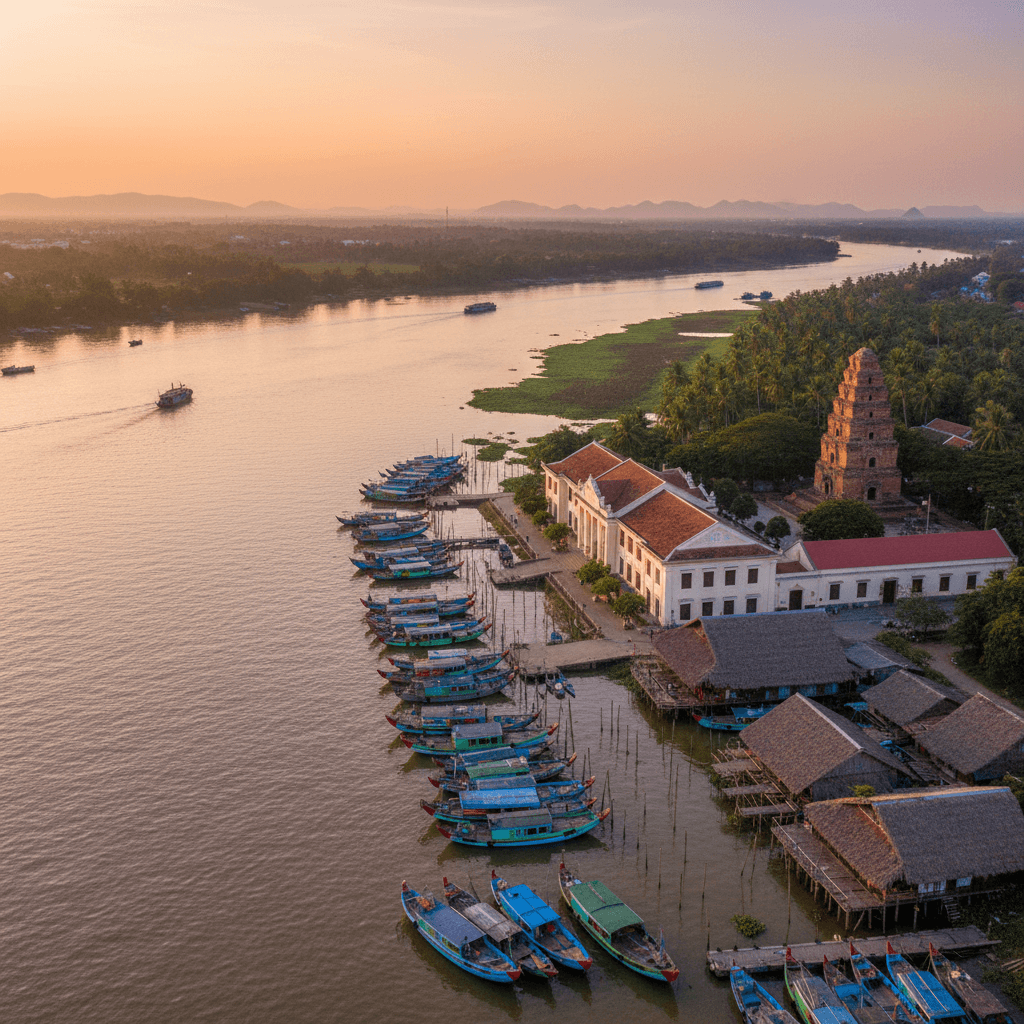
Tan Chau Port
Tan Chau, Vietnam
Your port day at a glance
- Walk to town?
- Ask us
- Distance to town
- 1.5 mi / 2.4 km
- Currency
- Vietnamese Dong / VND
On this page
Getting to town
Distance to town: 1.5 mi / 2.4 km.
Your day in port
For a typical 8–10 hour day, pair a morning canal or village excursion (by boat or bicycle) with a late‑morning market and workshop visit, then leave the afternoon open for a relaxed stroll in town or quiet time on board enjoying the river scenery.
Best time to visit
The best time to cruise into Tan Chau is during the dry season from November to March, when humidity is more manageable and rainfall is lower in the Mekong Delta. Shoulder months (October and April) can also be pleasant with fewer showers than peak monsoon.
- June–September is the rainy/monsoon season with frequent heavy showers, swollen river levels, and occasional localized flooding.
- Heat and humidity are high year‑round; midday sun can be intense, so plan outdoor activities early or late in the day.
- Mosquitoes can be prevalent near the river and rice fields, especially at dawn and dusk.
Shore experiences
- Short sampan rides along quiet canals, where kids can see floating fish farms and boats loaded with fruit and vegetables.
- Guided visit to weaving or mat‑making workshops, which are engaging for children interested in crafts and how things are made.
- Market visit with a local guide, including tasting tropical fruits and simple snacks in a controlled, supervised environment.
- Leisurely cyclo or tuk‑tuk rides around town (if organized by the cruise line) to minimize walking for younger kids and older relatives.
Food, drink and shopping
Local food and drink
- Fresh Mekong fish dishes, including catfish and snakehead prepared grilled, fried, or in hotpot.
- Bánh xèo (crispy Vietnamese rice pancakes) and other street‑style snacks, especially in and around the market.
- Local rice‑based specialties and simple noodle soups like hủ tiếu or phở at family‑run eateries.
- Vietnamese iced coffee (cà phê sữa đá) and sugarcane juice (nước mía) from street vendors or cafés.
- Tropical fruits such as mango, rambutan, dragon fruit, longan, and jackfruit, often sold fresh at Tan Chau Market.
Shopping
- Locally produced silk and textiles are standout buys; look for workshops where you can see the weaving process and purchase directly from artisans.
- Hand‑woven mats, simple handicrafts, and small souvenirs are sold in local markets and craft shops at generally modest prices.
- Bargaining is common in markets but should be done politely and with a smile; fixed prices are more likely at workshops partnered with cruise lines.
- Food items and fresh produce are best enjoyed on the spot rather than taken back to the ship due to customs and storage considerations.
What to wear
Lightweight, breathable clothing, a hat, and comfortable walking shoes or sandals are essential in the hot, humid climate; carry a light rain jacket or poncho in the wet season and dress modestly (covered shoulders and knees) for visits to temples or religious sites.
Advisor notes
Explain to clients that Tan Chau is an authentic Mekong Delta town with limited stand‑alone tourist infrastructure, so the quality of their experience will depend heavily on the guided excursions arranged by the cruise line. Emphasize its value as a cultural and everyday‑life immersion stop rather than a big‑ticket sightseeing port, making it ideal for travelers who appreciate local interactions and slower‑paced exploration.
Sources (7)
Practical information
- Currency
- Vietnamese Dong / VND
Useful apps
- Google Maps
- Google Translate
- Maps.me
- XE Currency


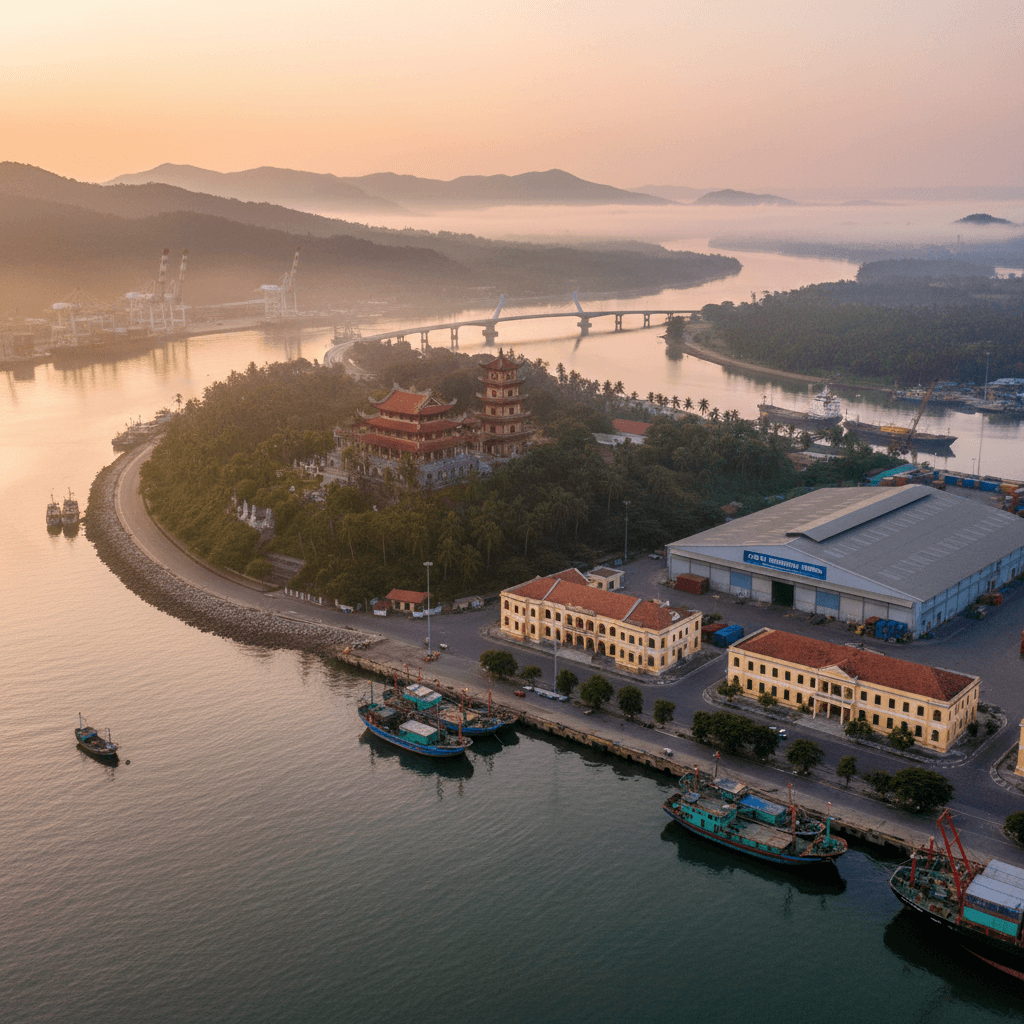
Planning a sailing that calls at Tan Chau?
Tell us which cruise you are looking at. We will help you plan the port day, from getting ashore to what is worth your time.